The Texture Trick That Keeps an All-Neutral Outfit From Looking Flat
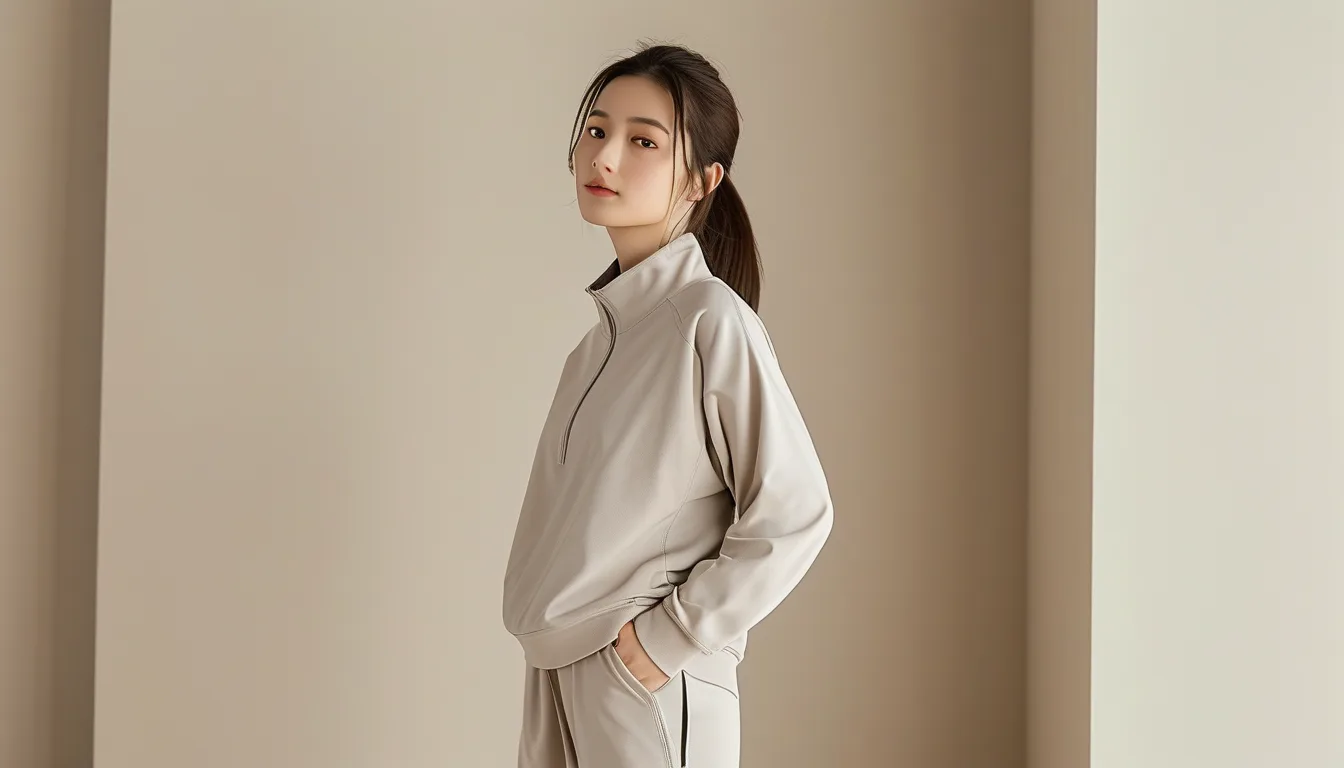
Quick Answer: Mixing at least two different textures — like a ribbed top with a smooth legging, or a matte fabric with a subtle sheen — is what keeps an all-neutral outfit from reading as flat, since without color variation, texture becomes the main visual interest doing the work.
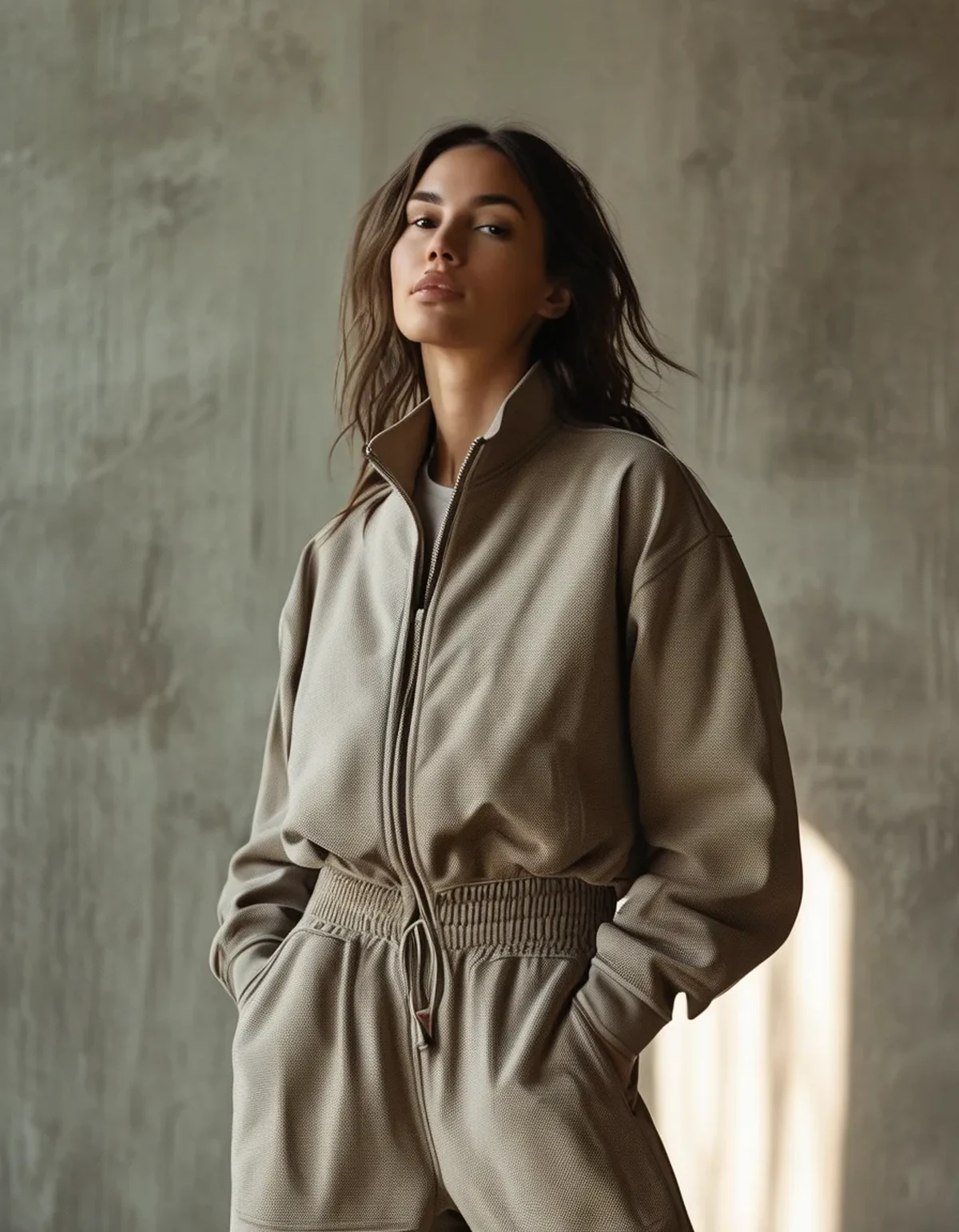
A head-to-toe neutral outfit in identical smooth fabric reads as unfinished. The same colors in mixed textures read as intentional.
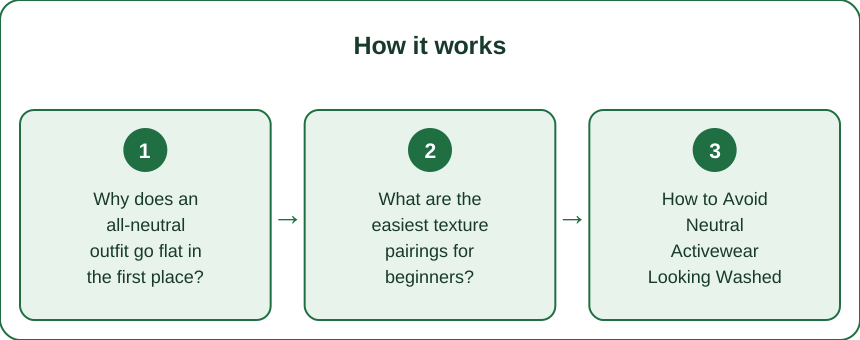
Why does an all-neutral outfit go flat in the first place?
Color is usually what creates visual interest and separates pieces from each other in an outfit — remove color variation, and fabric texture becomes the only remaining variable doing that visual separation work.
A smooth top over a smooth legging in the same tan or grey has nothing left to create contrast, which is why it can look unfinished even though nothing is technically wrong with it.
What are the easiest texture pairings for beginners?
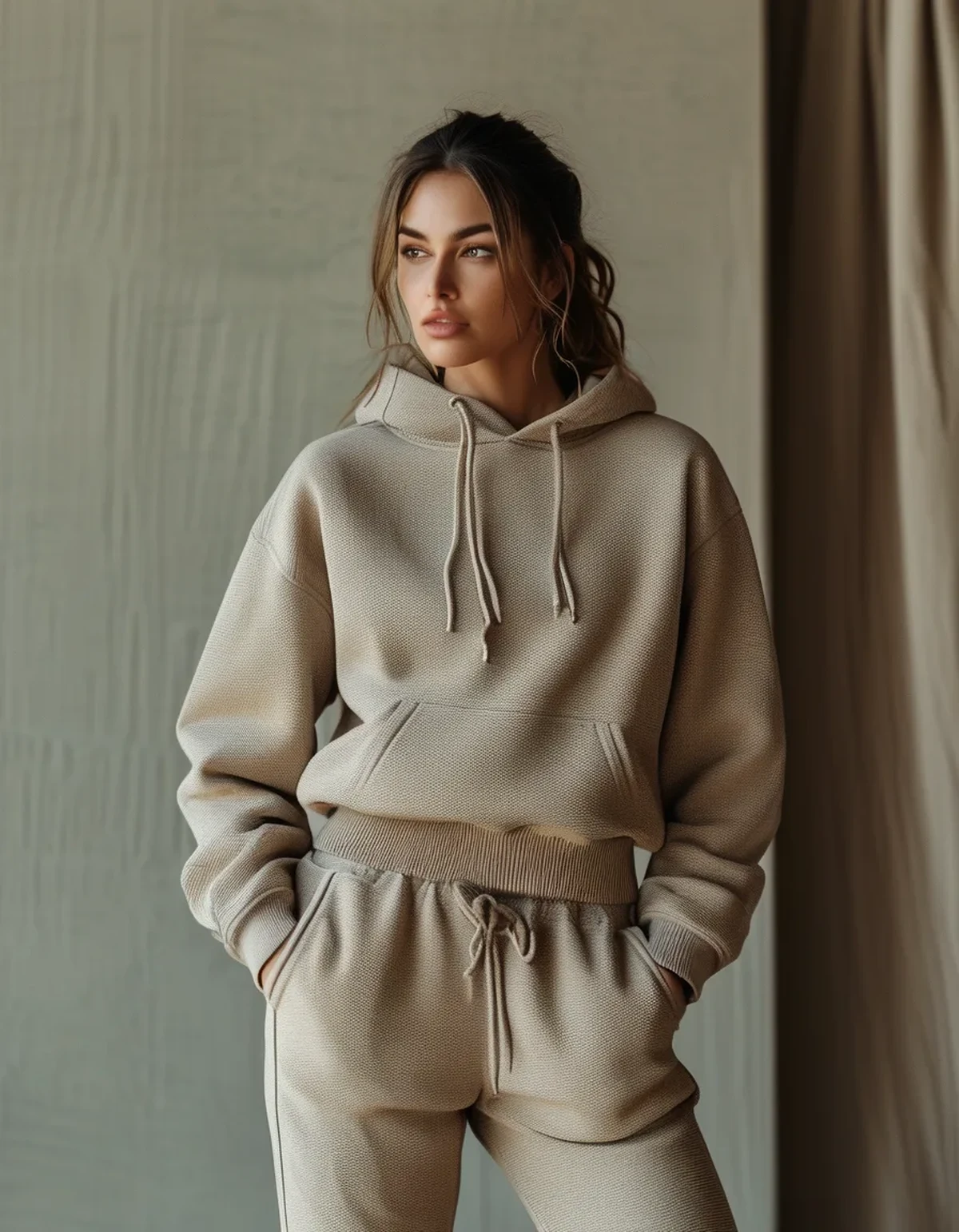
Ribbed knit with a smooth matte legging is one of the most forgiving combinations, since the visible ribbing texture reads clearly next to the flat surface of the legging without needing any color difference.
A slightly brushed or fleece-back fabric next to a sleek, structured piece is another reliable pairing, giving a soft-versus-crisp contrast that mixed colors would otherwise provide.
How to Avoid Neutral Activewear Looking Washed Out
Adding one piece with subtle sheen — a satin-finish jacket or a slightly glossy legging — catches light differently than the matte pieces around it, preventing the washed-out look that an all-matte neutral outfit can fall into under flat lighting.
Layering pieces of slightly different neutral shades (oatmeal next to true grey, for instance) rather than one identical tone throughout also adds enough depth that texture doesn’t have to do all the work alone.
Does this apply the same way to activewear as it does to regular outfits?
Activewear has fewer texture options than regular clothing, but ribbing, mesh panels, brushed fleece, and matte-versus-slight-sheen fabric still provide meaningful variation within a neutral activewear wardrobe.
Mesh paneling in particular is a texture option unique to activewear that adds visual interest without adding color or bulk.
FAQ: Neutral Outfit Texture Questions, Answered
Do I need three or more textures for it to work?
No — two clearly different textures is usually enough; adding more can start to look cluttered rather than more intentional.
Does this work with only two neutral shades, or do I need more variety?
Two shades is plenty as long as the textures differ enough to create contrast on their own.
What’s the fastest way to check if an outfit will look flat before wearing it?
Lay the pieces out and look for at least one clear textural difference between the top and bottom — if everything looks identically smooth, add a ribbed, brushed, or sheen piece before wearing it out.
TL;DR:
- Without color contrast, fabric texture becomes the main source of visual interest in a neutral outfit
- Ribbed-versus-smooth and matte-versus-sheen are the most forgiving texture pairings to start with
- Slightly varying the neutral shade itself, not just the texture, adds further depth
- Activewear-specific textures like mesh paneling offer another easy variation option
Neutral doesn’t have to mean flat — it just means the texture has to do the job that color usually does.
See It in Motion
Seen here: High Waist Yoga Leggings with Inner Pocket — shop it on bubblelime.com
Keep Reading
This article is for general informational and styling purposes only. Fit, sizing, and product availability may vary.