Why Does a Neutral Outfit Need One Structured Anchor Piece?
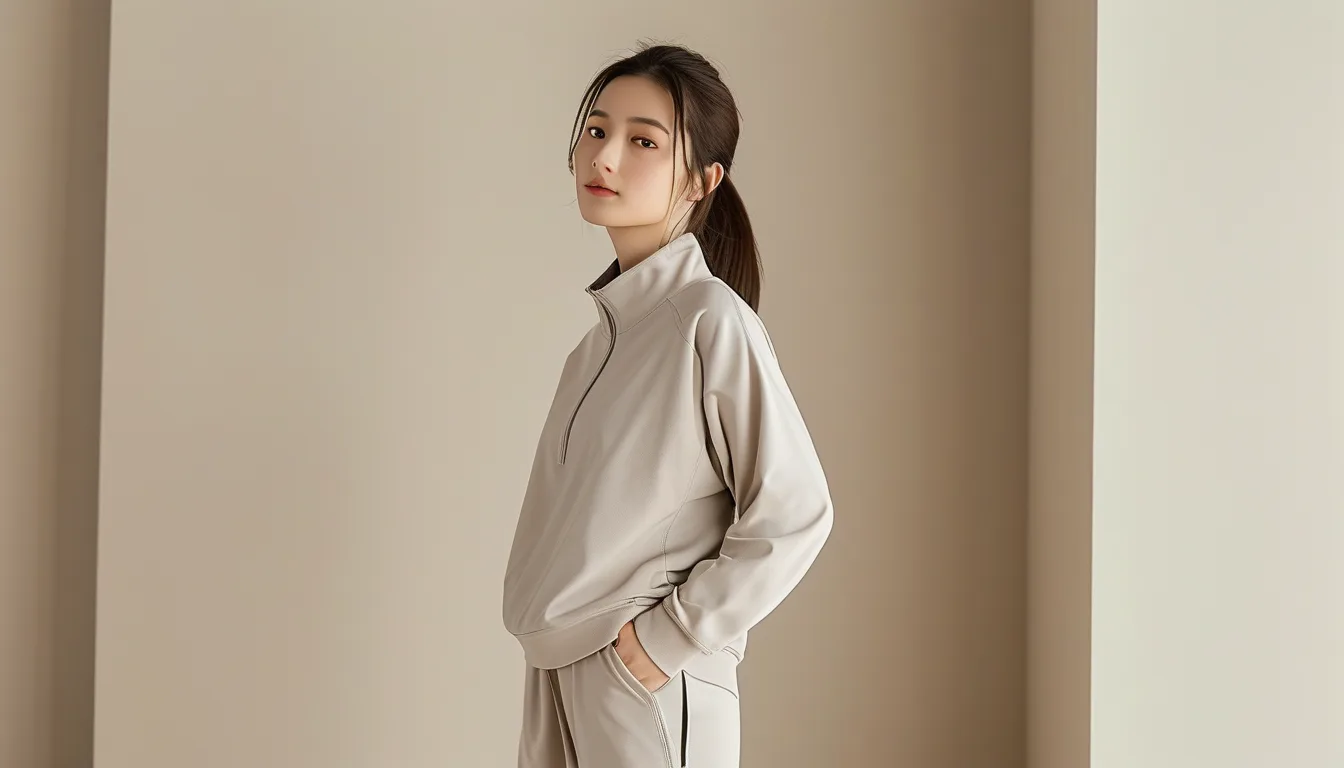
Quick Answer: Colour contrast normally creates the visual boundaries that make an outfit look composed. Neutrals remove it, so the only remaining boundary-maker is silhouette — which is why an all-soft neutral outfit reads as loungewear and the same shades with one structured piece read as deliberate.
You matched the undertones. You added texture. It still looks like you gave up.
The missing ingredient is usually not another shade. It is a shape.
This is general information, not medical advice.
What does structure actually do in a neutral outfit?
It creates edges.
In a high-contrast outfit, the eye finds the boundaries by colour — where the dark trousers end and the light top begins. That boundary organizes the whole look, and it happens automatically.
Remove the colour difference and those boundaries vanish. An oatmeal knit over cream joggers has almost no line where one ends and the other starts, which means there is nothing establishing your proportions. The outfit becomes a single soft mass, and a soft mass reads as unfinished regardless of how expensive the pieces are.
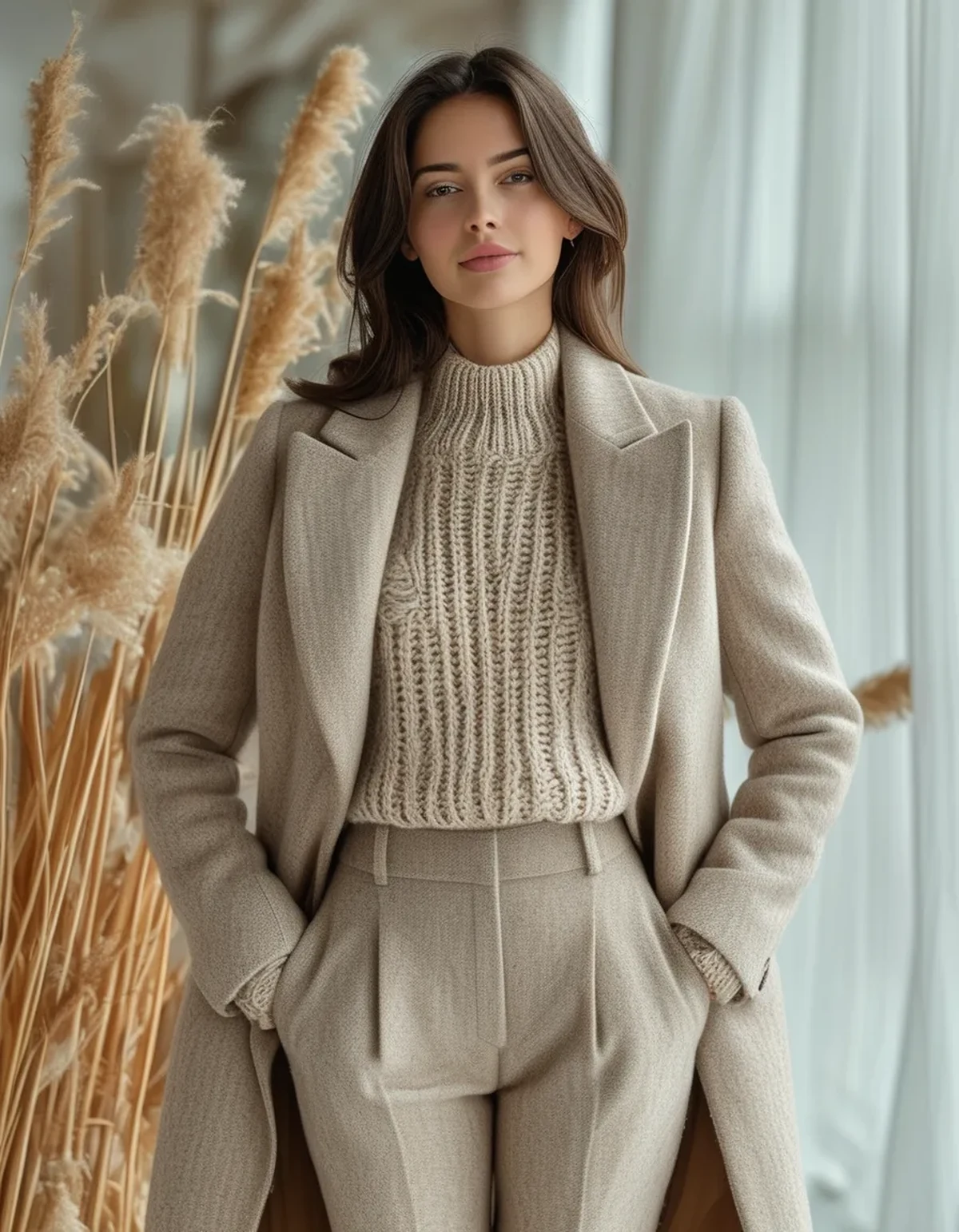
A structured piece supplies the edges that colour used to. A jacket with a defined shoulder, a coat with a collar that stands, a bag with a rigid shape, a shoe with a clean sole line — each one draws a border the eye can use.
One is usually enough. That is the part people get wrong in both directions: they add nothing and look shapeless, or they add three and the outfit becomes stiff.
Does a belt count?
Yes, and it is the cheapest version. A belt over a tonal outfit creates a horizontal boundary at the waist and does most of what a structured jacket does for a fraction of the effort.
Which piece should be the anchor?
Whichever one is closest to the top of the outfit, in most cases.
Outerwear first. A jacket or coat with real shoulder construction is the strongest anchor available, because it sits at eye level and defines the widest part of your silhouette. A structured layer over soft everything transforms the outfit more than anything else on this list.
A defined shoe second. A trainer with a clean, structured profile or a boot with a proper shaft gives the outfit a base. Soft slip-ons under soft everything is how a tonal look loses its bottom edge.
A bag third. A bag that holds its shape is a genuinely effective anchor and requires nothing from the clothes. This is why a structured bag rescues an otherwise flat outfit so reliably.
A tailored bottom fourth. Straight-leg trousers with a defined crease do the job well, though they change the register of the outfit more than the other options — this is the choice that moves an outfit from athleisure to something dressier.
What generally does not work as the only anchor: jewellery, a scarf, or anything small. Those add interest but not structure, and the outfit still lacks a defined outline.
What if my whole wardrobe is soft?
Then the highest-value single purchase is a structured jacket in a neutral that bridges your existing shades. It will get worn with everything you already own, which makes it unusually good value for a wardrobe gap.

How to build the outfit in practice
A workable formula: two soft pieces, one structured, one defined edge.
- Two soft: the base layers — knit, jersey, fleece, whatever sits against you.
- One structured: the jacket, coat, or shaped outer layer.
- One defined edge: shoes with a clean line, a belt, or a bag that holds its shape.
That gives you softness where it is comfortable and definition where it is visible, which is the balance tonal dressing needs.
The fall version of this gets easier, not harder. Outerwear season supplies the anchor by default — the structured layer you need is the coat you were going to wear anyway. Late summer is genuinely the harder season for neutrals, because there is no outer layer to do the work and everything is soft by necessity. If your tonal outfits have been falling flat in August and you have been blaming the shades, that is probably why.
A useful check before you leave: look at your outline, not your outfit. Squint at the mirror until the details blur. If what remains is a shape with a recognizable outline, it works. If it is a soft column, add the anchor.
Myth vs Fact: making neutrals look intentional
Myth: Adding texture is enough. Fact: Texture solves flatness, which is a different problem from shapelessness. A ribbed knit over a waffle base is more interesting than two flat jerseys, and it still has no edges. Most neutral advice stops at texture and that is why it only half works.
Myth: Structure means stiff or formal. Fact: A denim jacket, a quilted vest, or a technical shell all count. The requirement is that the piece holds its own shape when you are not wearing it, not that it is tailored.
Myth: More shades of neutral will fix it. Fact: Adding a fourth beige mostly adds risk of a mismatch. Shade variety helps up to a point and then stops contributing anything; structure keeps contributing.
Myth: Fit is the same thing as structure. Fact: Related but not identical. A well-fitted soft outfit looks better than a badly fitted one and still lacks defined edges. Fit is necessary and not sufficient.
Myth: This only matters for going out. Fact: It matters most for the outfits you wear in daylight where people see you — school runs, errands, coffee. Nobody is assessing your outline at home, which is exactly why the home version of a neutral outfit is the one that trained you to think this does not matter.
FAQ: Neutral Outfit Structure Questions, Answered
Can activewear be structured?
Yes, though it takes a specific piece — a technical shell, a woven jacket, or a longline vest. Most performance layers are deliberately soft, which is part of why full activewear outfits in neutrals are the hardest version of this to pull off.
What if I want to look soft and relaxed on purpose?
That is a valid look and this still applies in a lighter form. One defined edge — a structured shoe or a belt — keeps a deliberately relaxed outfit reading as a choice rather than an accident.
Does this apply to black outfits too?
Less. Black provides its own definition through depth and shadow, which is one reason all-black is more forgiving than all-beige. Light neutrals have the least internal contrast and need the most help.
How structured is too structured?
When more than one piece is rigid, the outfit starts reading as costume-like or stiff. Two structured pieces can work if one is small — a jacket plus a structured bag is generally fine; a jacket plus tailored trousers plus a rigid boot is a lot.
Is this why my outfit looks better in photos with a jacket on?
Almost certainly. Photos flatten depth and lighting, so they lose whatever subtle shade differences you were relying on. Silhouette survives flattening; tonal nuance does not.
TL;DR:
- Colour contrast normally creates an outfit’s boundaries; neutrals remove it, so silhouette has to.
- One structured piece supplies the edges — outerwear first, then shoes, bag, or a tailored bottom.
- The formula: two soft pieces, one structured, one defined edge.
- Texture fixes flatness, not shapelessness — they are different problems.
- Squint at the mirror: if a recognizable outline survives, it works.
Good neutral dressing is usually described as a colour skill. It is at least as much a shape skill, and the shape half is the one nobody mentions.
This is general information, not medical advice.
Keep Reading
This article is for general informational and styling purposes only. Fit, sizing, and product availability may vary.